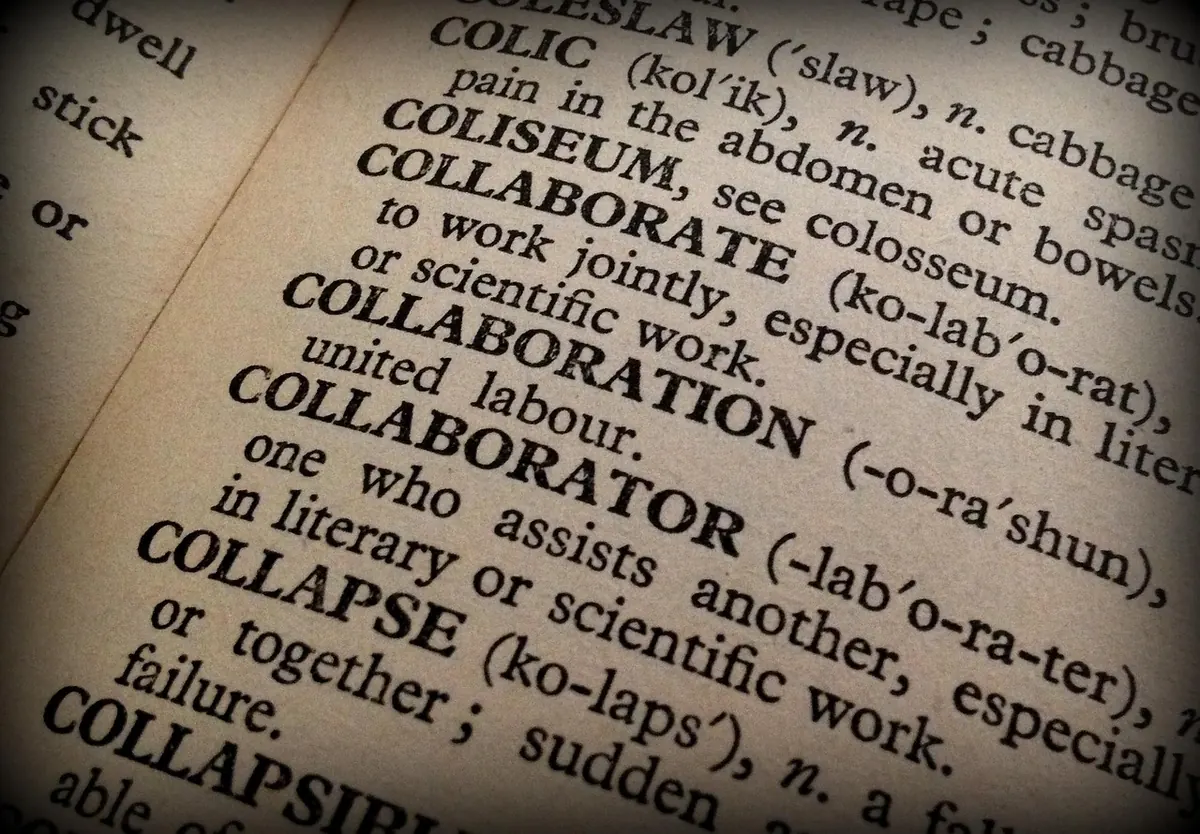
How to Read a Dictionary Entry: A 7-Point Checklist
A dictionary entry is a compressed thing. Ten lines of type can hold a spelling, two pronunciations, four senses, a regional label and a quiet warning that a word is dated. Read it the way you would read a train timetable rather than a novel: the layout carries meaning, and the small print often matters more than the bold. Work through the checklist below in order and you will rarely misread an entry again — and you will start noticing when a dictionary is gently telling you not to use a word.
1. The headword, and whatever sits beside it
Start with the bold word. It is the headword, and everything that follows describes that word and nothing else. Before you go further, check four things about it:
- Superscript numbers. bank¹ and bank² are separate entries, not separate senses. The dictionary is telling you these are historically different words that happen to look alike.
- Word class changes. A single headword may cover a noun, a verb and an adjective, each with its own numbered block of definitions.
- Spacing and hyphens. post office and make-believe are single headwords with fixed internal punctuation. Get that wrong and your spelling looks careless.
- Capitalisation. If the headword is lower case, the word is normally lower case, even when it comes from a proper name.
Variant spellings usually follow the headword, often introduced by also or or. The first form listed is the preferred one.
2. Pronunciation comes before meaning
Skipping the pronunciation is the most common shortcut, and it costs you. The transcription between slashes uses the International Phonetic Alphabet, and British dictionaries typically give a British form first, then an American one.
Three marks do most of the work. A vertical stroke ˈ before a syllable shows primary stress; a lighter mark shows secondary stress; dots or hyphens divide syllables. Say the word aloud with the stress in the right place and you will sound closer to a native speaker than any amount of extra vocabulary will achieve.
Watch for pairs where the noun and the verb differ only in stress. Record as a noun takes the stress on the first syllable; as a verb, on the second. Present behaves the same way. If a dictionary gives two transcriptions and you cannot see why, look at the part of speech beside each one.
3. Part of speech — and the grammar behind it
The abbreviation after the headword (n., v., adj., adv., prep.) tells you how the word behaves in a sentence. Treat it as a set of instructions, not a label.
Inflections and patterns
Below or beside the headword you will often find the irregular forms — past tense, past participle, plural, comparative. Then come the patterns: with obj. or no obj. for verbs, and notes such as often with -ing, usually in the negative or not used in the passive. These details separate a sentence that sounds right from one that merely makes sense.
4. Sense numbers: order is not importance
Numbered definitions are separate meanings, and sub-senses marked a, b, c are closely related variations on the one above. Some dictionaries order senses by frequency of use; others, particularly historical ones, order them by date of first record. A rare sense can therefore sit at number one.
Find the sense that fits your sentence, then read the two either side of it. Polysemous words rarely have a single meaning, and the difference between a sound argument and a sound sleep is entirely a matter of which numbered line you are reading.
5. Examples: the part people skip
Italic examples show the word in a real sentence, and they carry information the definition cannot. Definitions describe meaning; examples show grammar. A definition such as “to stop doing something” does not tell you where the object goes, but the example she gave up smoking does.
Bold type inside an example usually marks a common collocation — the words that habitually appear together. If you are writing in a second language, collect those pairings. They are what make a sentence sound idiomatic, and they are rarely guessable.
6. Labels: the limits on a word
Labels are the smallest print in an entry and the most useful. They tell you where, when and to whom a word is acceptable. Treat any of the following as a warning rather than a description:
- Register: informal, formal, literary, slang, vulgar.
- Region: British, chiefly North American, Scottish, Australian.
- Subject: law, medicine, computing, cricket — specialised, and often odd outside its field.
- Time: archaic, dated, historical, obsolete. Dated means it will make you sound older than you are.
- Attitude: offensive, derogatory, humorous. These are not negotiable.
Cross-references such as see also, compare and → are worth following. They usually lead to the word you actually wanted.
7. Reading one entry from top to bottom
Take bank. You will find at least two entries. The first is a noun with a sense for the land beside a river, another for a financial institution, another for a raised mass, and another for a row of similar objects — a bank of screens, a bank of switches. The second is a verb, covering the tilting of an aircraft and relying on something, the latter usually shown as bank on.
Read in order and the entry stops being a list. The headword tells you there are two words here. The numbered senses tell you the riverbank and the high street share a history. The example don’t bank on it tells you the register is conversational. The labels tell you whether you can use it in an exam essay. That is five pieces of information from a dozen lines of type.
Making the checklist a habit
Pick a word you already know well and read its full entry once a week. You will be surprised how often the pronunciation, the label or the second sense contradicts what you assumed. Keep a note of the labels you meet; within a month you will have a personal list of words to handle with care.
Note which dictionary you are reading and when it was published or updated. Dictionaries differ on sense order, spelling preference and how quickly they record new usage, so comparing two entries for the same word is never wasted effort. Where a word carries legal, medical or financial weight, treat the dictionary as a starting point and confirm the current position with a qualified professional before acting on it.
Photo: diannehope14 / Pixabay

Scrabble vs Countdown: Which Word Game Builds Vocabulary Best?
Scrabble rewards rare words and precise spelling; Countdown rewards long, everyday words found fast. Here...

Where British Place Names Come From: An Etymology Explainer
British place names are built from recurring Old English, Norse, Celtic and Latin elements. This guide...
About Us