Thesaurus vs Dictionary: When to Use Each Reference Tool
You are editing a sentence and the right word is hovering just out of reach. Do you reach for the dictionary or the thesaurus? The answer depends on what you are missing: the meaning of a word, or the best word for the job. They are not rivals. They are tools with different purposes, and using one when you need the other causes trouble.
What a Dictionary Is For
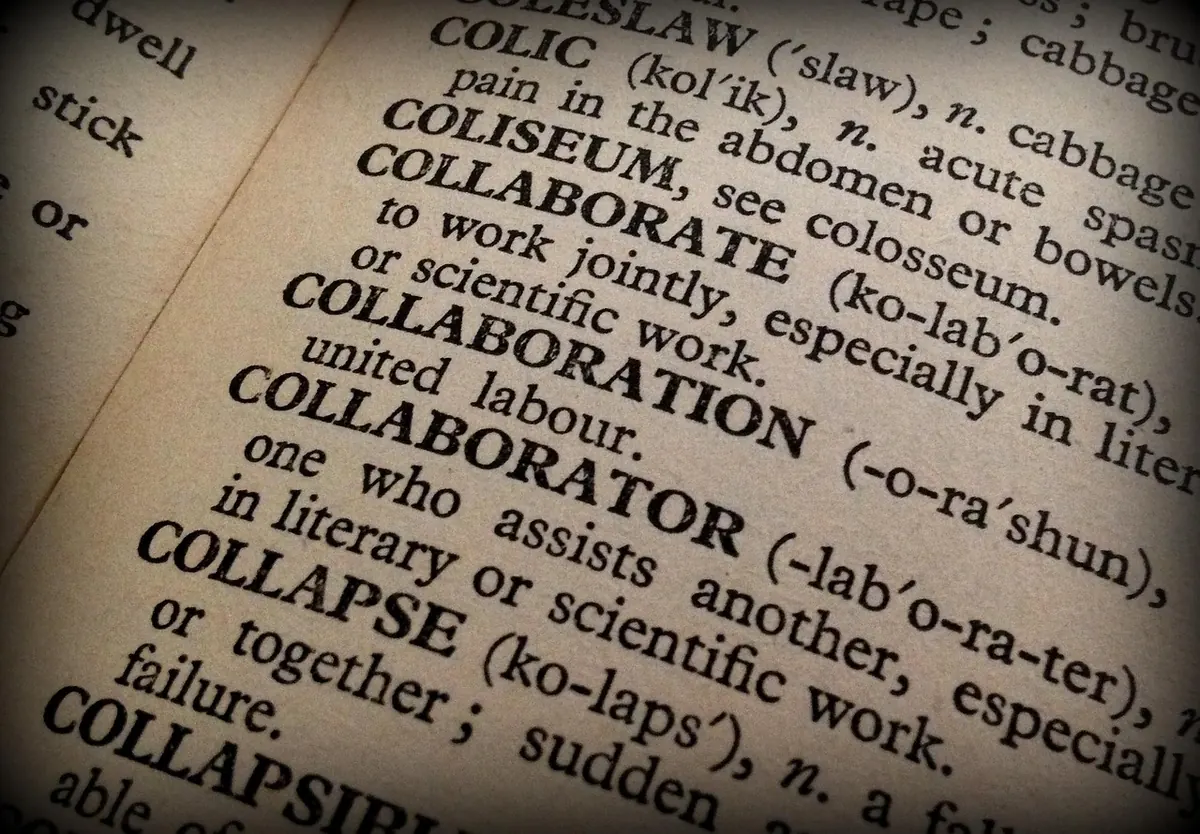
A dictionary records words. It gives spelling, pronunciation, word class, inflected forms, meanings, example sentences, usage labels and sometimes etymology. Its central job is to answer a precise question: what does this word mean, and how is it used?
Look up refute. Careful users distinguish it from rebut: to refute a claim is to prove it wrong, while to rebut it is to contradict or argue against it. A dictionary will usually make that difference clear. A thesaurus might list them together, which is why a thesaurus alone can mislead.
Dictionaries are strongest when you need facts about a word. They are weaker when you need to choose between several possible words. An entry can tell you that terse means using few words, but it will not decide whether terse, concise or blunt suits your sentence. Context does that.
What a Thesaurus Is For
A thesaurus groups words by meaning. Its central job is to answer a different question: what else could I say here? It helps you avoid repetition, recover a word you have forgotten, or find a more precise term. Many thesauruses organise entries by part of speech and by sense, and some include antonyms and related terms.
The strength of a thesaurus is range. If you are writing about a character who is angry, it can offer cross, irritated, indignant, furious, livid and irate. That range is useful. It is also the source of its main danger.
Synonyms are rarely interchangeable. Cross is mild and common in British English. Livid is intense. Indignant suggests anger at unfair treatment. Choose the wrong one and your sentence changes meaning, tone or both. A thesaurus offers options, not instructions.
The Core Difference: Meaning Versus Choice
A dictionary answers questions about meaning. A thesaurus answers questions about choice. If you do not know what a word means, a thesaurus is dangerous. If you know what you mean but need a different shade of expression, a dictionary alone may not be enough.
A dictionary tells you what a word means. A thesaurus tells you what other words might mean something similar. Only one of those jobs is safe to do first.
In practice, the two work in sequence. You establish meaning, then explore alternatives, then confirm the alternative you have chosen.
When to Use a Dictionary
Reach for the dictionary when the word itself is the problem. Common situations include:
- You meet an unfamiliar word and need its meaning.
- You need the correct spelling or word class.
- You are unsure which sense of a familiar word applies.
- You need pronunciation, stress or syllable division.
- You are checking a usage label such as archaic, informal, chiefly British or offensive.
- You need an inflected form: past tense, plural, comparative.
- You are comparing commonly confused words.
That last point deserves attention. British English has several pairs that cause regular trouble. Practice is the noun; practise is the verb. Licence is the noun; license is the verb. Affect is usually a verb, while effect is usually a noun. Disinterested means impartial; uninterested means not interested. A dictionary gives you the facts you need to make the stylistic decision.
Reading a dictionary entry properly
Do not stop at the first definition. Read the whole entry for the sense you need. Check the examples, because they show the word in company. Notice whether the entry marks a sense as informal, dated or regional. A word can be correct and still wrong for your register.
When to Use a Thesaurus
Reach for the thesaurus when you know your meaning but the wording is weak, repeated or imprecise. It is particularly useful for:
- Avoiding accidental repetition in a paragraph.
- Finding a word that is on the tip of your tongue.
- Matching the formality of a piece of writing.
- Finding an antonym or a related idea.
- Exploring a concept before you commit to a term.
Use it after you have established the sense you want. A good routine looks like this:
- Write the meaning in plain words: I want to say the plan was not practical.
- Look up the key word or phrase in the thesaurus, choosing the correct part of speech.
- Read the synonyms by sense, not as one long list.
- Check connotations, intensity and formality.
- Test each candidate in the sentence.
- Confirm your chosen word in a dictionary.
Suppose you have written The meeting was very bad. A thesaurus may suggest dire, poor, disastrous, unproductive or tense. Each one changes the claim. If you mean the meeting achieved nothing, unproductive is accurate and dire is not. The thesaurus did not choose for you. It widened the menu.
How to Use Both Tools Together
The most reliable method is a loop: dictionary, thesaurus, dictionary. Start with the dictionary if there is any doubt about meaning. Move to the thesaurus once you can state the sense you need. Then return to the dictionary to confirm that your chosen synonym carries the right meaning, grammar and register.
Pay attention to collocation as well. A thesaurus may offer powerful as a synonym for strong, but we say heavy rain, not powerful rain. We make a decision, not do a decision. Dictionaries and good usage guides record these partnerships; synonym lists often do not.
Common Pitfalls and How to Avoid Them
Both tools can lead you astray if you ask them to do the wrong job.
- Thesaurus syndrome. Replacing plain words with longer ones does not improve writing. Use is usually better than utilise. Start is usually better than commence.
- Ignoring register. A word can be accurate and still clash with your tone. Kids and children mean similar things, but they do not belong in the same paragraph.
- Assuming one meaning. Many words have several senses. A synonym for one sense may be nonsense in another.
- Fearing repetition too much. Repetition can be clarity. In a legal or technical sentence, repeating the defendant is safer than cycling through the accused, the individual and the party.
- Treating the dictionary as a rulebook. Dictionaries describe how words are used. They are not always making a judgement about what you should write.
A Practical Rule of Thumb
If you cannot explain the word's meaning in your own words, use the dictionary first. If you can explain it but need a different shade, use the thesaurus next. Then check the dictionary again before you commit. Keep both tools nearby, because they cover each other's blind spots. A thesaurus without a dictionary is a set of keys with no labels. A dictionary without a thesaurus is a map with only one route. Used together, they help you say exactly what you mean.
Photo: garten-gg / Pixabay

Scrabble vs Countdown: Which Word Game Builds Vocabulary Best?
Scrabble rewards rare words and precise spelling; Countdown rewards long, everyday words found fast. Here...

Where British Place Names Come From: An Etymology Explainer
British place names are built from recurring Old English, Norse, Celtic and Latin elements. This guide...
About Us