How to Use a Monolingual Dictionary: A Step-by-Step Guide for British English Learners
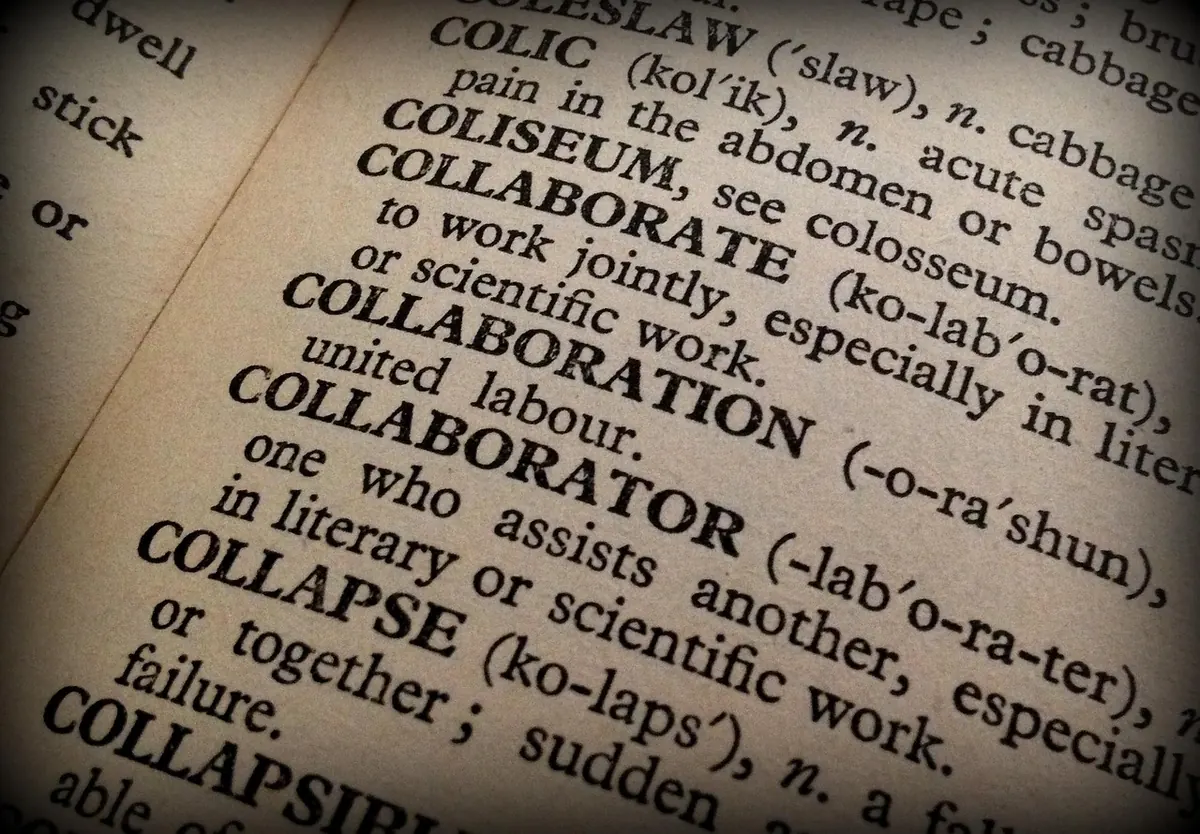
Reaching for a bilingual dictionary feels safe. You meet an unfamiliar word, you find its equivalent in your first language, and you move on. The trouble is that word-for-word equivalents mislead: few words in any two languages cover exactly the same ground, carry the same tone, or slot into a sentence the same way. A monolingual dictionary — one that explains English words in English — solves that problem, but only if you know how to read it.
An entry is not a sentence to be skimmed. It is a small, tightly packed map of a word: what it means, how it behaves in a sentence, how it sounds, and where it belongs. Reading that map in the right order takes a few minutes to learn and saves years of guesswork.
Why an English-only dictionary earns its keep
Learner's dictionaries from publishers such as Oxford, Cambridge, Collins and Longman define everything using a limited defining vocabulary of roughly two thousand common words. That constraint is a gift. Once you are at intermediate level, the definitions themselves are readable, and every lookup exposes you to the same high-frequency words again and again. Your vocabulary grows sideways as well as downwards.
Two habits make the difference. Read the whole entry before deciding which sense fits your sentence, and treat grammar information as part of the meaning rather than as decoration.
Find the right headword first
Dictionaries are organised by base form, not by the shape of the word that puzzled you. If you met bought, look up buy. If you met mice, look up mouse. If you met running, look up run. Irregular forms are listed at the end of the entry or cross-referenced near the top, so you rarely have to guess twice.
Phrasal verbs and fixed phrases hide under their main verb. Put off lives under put; look forward to under look; make up your mind under mind, and sometimes under make as well. When a phrase means something you could not work out from its parts, the dictionary almost always gives it a numbered sense of its own.
Watch for homographs — words spelled alike but unrelated. Bank beside a river and bank where you keep money are separate entries with separate numbering. If the definitions under the first entry make no sense in your context, scroll on; you are probably in the wrong one.
Read the senses in the right order
In learner's dictionaries, senses are arranged with the most frequent first. That is useful information in itself, but it also means the sense you need may be third or fifth on the list. Many entries carry signposts — short labels in bold or coloured type such as CLOTHES, MONEY or FEELING — precisely so you can jump to the right one.
Do not stop at sense one out of habit. If your sentence is about money and the entry opens with rivers, keep reading. Only when a whole entry fails to fit should you suspect you have the wrong headword or the wrong part of speech.
Decode the grammar codes
This is the part most learners skip, and it is where the real value sits. Codes tell you how to build your own sentences with the word, not just recognise it.
- [C] and [U] mark countable and uncountable nouns. This is why advice cannot take a plural and information takes no an.
- [T] and [I] mark transitive and intransitive verbs — whether an object is required, optional or impossible.
- Patterns such as + to infinitive, + -ing, + that clause or verb + object + to infinitive settle arguments about structures that feel similar but are not.
- Prepositions and particles that follow the word: depend on, interested in, good at.
If a dictionary shows that enjoy is followed by -ing, that is not a curiosity — it is a rule you can apply immediately.
Use the pronunciation properly
British dictionaries usually give the British transcription first and the American one after, often with a small speaker symbol online. Read three things, in this order. First the stress mark: ˈ before the stressed syllable, ˌ before a weaker secondary stress. Then the vowel in that stressed syllable, which is the sound people will notice most. Then the weak syllables, which in English are usually reduced to /ə/ — the sound in the first syllable of about.
Say the word aloud once with the stress in the right place before you look at anything else. Words such as photograph, photographer and photographic shift their stress, and the transcription shows you exactly where the beat falls.
Take the labels seriously
Register labels tell you where a word belongs. You will meet informal, formal, slang, humorous, dated, literary, specialist, offensive and taboo. Regional labels such as British, North American or Scottish tell you who uses it and where.
A word marked informal is fine with friends and wrong in a job application. A word marked formal or literary will sound stilted in a text message. And if a label reads offensive or taboo, take it at face value: avoid the word until you understand exactly why it carries that warning.
The definition tells you what a word means. The labels tell you whether you should be the one using it.
Mine the examples for collocations
Examples do work that definitions cannot. They show which words keep company with the headword — heavy rain, strong coffee, make a decision — and which prepositions follow. They show typical subjects and objects, and the kind of sentence the word lives in.
Copy one full example sentence into your notes rather than a bare translation. A sentence you can reuse teaches the word's meaning, its grammar and its tone at the same time, and it gives you something to imitate when you write your own.
A routine you can run in five minutes
- Guess the meaning from context and write the guess down.
- Work out the base form and find the entry.
- Match the sense to your sentence, using the signposts.
- Read the grammar pattern and one example aloud.
- Check the stress and say the word again with the right rhythm.
- Note the label, then write one sentence of your own using the word.
Ten words approached this way each week will do more for your English than a hundred skimmed ones. Keep a notebook with a line for the word, a line for the pattern, and a line for your own sentence. After a month, read back through it: you will find you can recall the words without the dictionary, which is the whole point of owning one.
Photo: Snapwire / Pexels
Scrabble vs Countdown: Which Word Game Builds Vocabulary Best?
Scrabble rewards rare words and precise spelling; Countdown rewards long, everyday words found fast. Here...

Where British Place Names Come From: An Etymology Explainer
British place names are built from recurring Old English, Norse, Celtic and Latin elements. This guide...
About Us