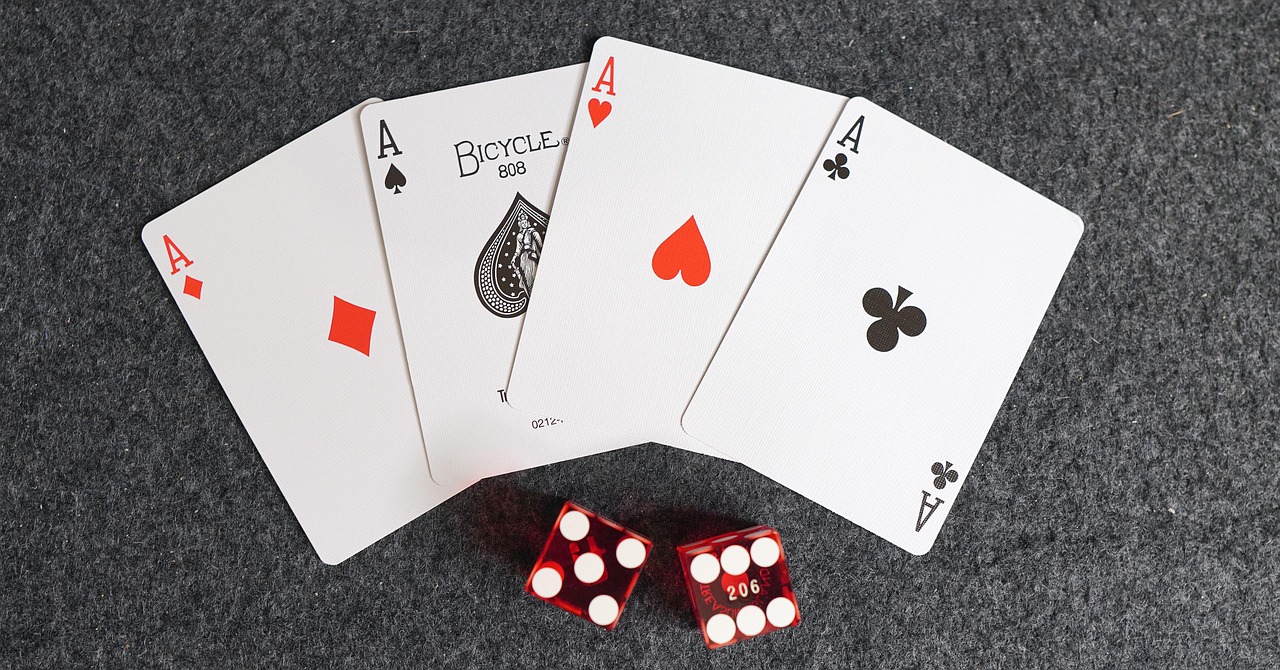
Slots, Poker and the Math That Keeps iGaming Honest
Strip away the neon, the spin animations and the slick mobile apps, and an online casino is really just a machine that moves numbers around. The players who last — the ones who treat it as entertainment instead of a lottery ticket — are the ones who understand a little of that machinery. Not the code, exactly, but the math and psychology underneath it. That's what this article is about: the handful of concepts that separate a fun session from an expensive lesson.
The House Edge Is Not a Conspiracy — It's a Business Model
Every casino game carries a built-in mathematical advantage for the operator. This isn't secret, and it isn't cheating; it's the margin that keeps the lights on. What matters is that the margin varies wildly from game to game.
- Blackjack (basic strategy): roughly 0.5% house edge
- Baccarat (banker bet): about 1.06%
- European roulette: 2.7%
- American roulette: 5.26% — the extra double-zero really hurts
- Slots: typically 2% to 10%, depending on the title and the jurisdiction
Notice the pattern. Games where your decisions matter tend to have thinner edges. Games that are pure chance — slots, keno, most scratch cards — tend to have fatter ones. That's not an accident. Operators can afford tighter margins on skill games because players who feel in control stick around longer.
Here's the practical takeaway: if you play 100 hands of blackjack at $10 a hand, your expected loss with basic strategy is around $5. Play 100 spins on a slot with a 5% edge at $1 a spin, and your expected loss is roughly the same — but the variance is dramatically higher. Slots swing harder. You'll see bigger wins and bigger busts. Know which ride you're on.
RTP, Volatility and Why 'Hot' Machines Don't Exist
Return to player (RTP) is the percentage of all wagered money a game pays back over millions of spins. A 96% RTP slot returns $96 for every $100 bet — on average, over time, across everyone. It says nothing about your next spin.
Volatility is the other half of the story. Two slots can both have 96% RTP, but one might pay small amounts constantly while another pays rarely and hugely. Low-volatility slots are gentler on your bankroll; high-volatility titles can eat 200 spins before a single meaningful hit. Neither is "better" — they suit different moods and budgets.
And no, a machine that hasn't paid out in an hour is not "due." Modern slots use random number generators that have no memory. Every spin is independent. The gambler's fallacy — the belief that past results influence future ones — is the single most expensive misunderstanding in iGaming. There is a useful overview at mahjong ways.
Reading a slot's paytable takes 90 seconds and saves money
- Check the RTP if published (some regulators require it; some don't).
- Look at the max win and the hit frequency — usually in the game info screen.
- Note the minimum and maximum bet. Some slots change volatility at different stake levels.
- Check whether the bonus round is triggered by scatters, a buy feature, or both.
That's it. You don't need to be a mathematician — you just need to know whether you're playing a grind game or a jackpot chaser.
Poker Is a Different Animal Entirely
Poker deserves its own paragraph because, unlike slots or roulette, you're not playing against the house. You're playing against other people, and the house takes a rake — usually 5% of the pot up to a cap. That means a skilled player can actually be profitable over time. It also means the fish at the table are the ones funding your win rate, and when they leave, your edge shrinks.
Three things separate winning poker players from the rest:
- Position. Acting last gives you more information and more options. It's the most underrated edge in the game.
- Bankroll management. Serious cash-game players keep at least 20 to 30 buy-ins for their stake. Tournament players often want 50 to 100.
- Selecting soft games. A mediocre player at a soft table beats a great player at a tough one, most nights.
Online poker adds volume and HUDs, but the fundamentals haven't changed since Doyle Brunson was in his prime. Play tight, play aggressive in position, and don't fall in love with ace-king preflop.
Bonuses: Read the Terms or Don't Bother
Welcome bonuses are marketing, and marketing always has fine print. A 100% match up to $500 sounds great until you realize the wagering requirement is 40x the bonus and slots only contribute 60%. Do the math before you deposit a cent.
Here's a quick gut-check formula. Multiply the bonus by the wagering requirement, then divide by the game's RTP contribution. A $200 bonus at 40x with slots contributing 100% means you need to wager $8,000 before withdrawing. At a 96% RTP slot, expected loss on that volume is around $320 — more than the bonus itself. That doesn't mean bonuses are worthless, but it does mean a bad bonus is worse than no bonus.
Look for: low wagering requirements (under 30x), reasonable time limits (30 days or more), and games that contribute 100% toward clearing. Skip anything that caps your max bet while clearing or excludes the game you actually want to play.
The Practical Stuff Nobody Tells New Players
A few hard-earned lessons that don't fit neatly into categories:
- Set a loss limit before you log in. Not after your first bad session. Before. Write it down.
- Use licensed operators. Regulated sites in jurisdictions like the UK, Malta, or various US states are audited. Unlicensed sites are not, and payouts are not guaranteed.
- Withdraw when you're ahead. A balance on screen is not money in your pocket until you cash out.
- Avoid chasing losses. The fastest way to turn a $50 loss into a $500 one is to double your bets trying to get even.
- Take breaks. Fatigue ruins decision-making, especially in poker and blackjack.
None of this is glamorous. But the players who treat iGaming as a hobby with a budget — rather than a path to riches — are the ones who keep enjoying it year after year.
The Bottom Line
iGaming is entertainment with a mathematical cost. Slots offer the biggest swings and the thinnest return; poker rewards skill but punishes impatience; table games sit somewhere in between. Know the edge you're playing against, understand variance, treat bonuses as what they are, and never gamble money you'd miss. Do that, and a night at the virtual felt stays exactly what it should be — a bit of fun, not a financial strategy.

Scrabble vs Countdown: Which Word Game Builds Vocabulary Best?
Scrabble rewards rare words and precise spelling; Countdown rewards long, everyday words found fast. Here...

Where British Place Names Come From: An Etymology Explainer
British place names are built from recurring Old English, Norse, Celtic and Latin elements. This guide...
About Us